
Extreme winter weather sweeping across the U.S. has sparked viral warnings about trees exploding from cold, with social media buzzing over loud bangs echoing through frozen neighborhoods. While full-on tree explosions make for dramatic headlines, forestry experts clarify that these startling sounds come from frost cracks – sudden splits in trunks caused by brutal temperature drops.
As arctic air plunges temperatures below -20°F this week, sap inside trees freezes and expands like ice in a tray, creating immense pressure that can sound like gunshots. The trees exploding from cold phenomenon grips public attention, especially amid forecasts of wind chills hitting -60°F in the Midwest.
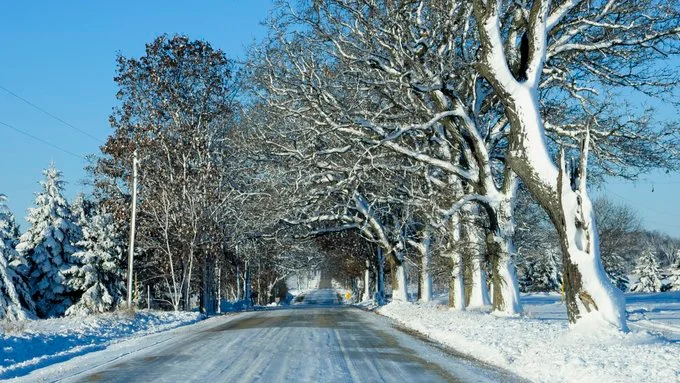
What Causes Trees Exploding from Cold? Frost Crack Science
Trees exploding from cold occurs when supercooling sap – which stays liquid far below water’s freezing point – finally solidifies during rapid temperature crashes. This expansion generates cracking forces up to 2,000 psi, splitting bark and wood vertically from ground to crown.
Wisconsin DNR forest specialist Bill McNee explains: “The outer bark contracts faster than inner wood, plus freezing sap adds explosive pressure. You hear a boom, branches may drop, but true explosions are rare – the crack usually stabilizes as part of the tree.”

Frost cracks favor thin-barked species:
- Maples and lindens: Most vulnerable due to sap volume.
- Sycamores: Prone to dramatic longitudinal splits.
- Young trees: Less adapted than mature ones that dehydrate sap pre-winter.
Healing often occurs as new tissue forms over wounds, though deep cracks invite fungi, rot, and structural failure.

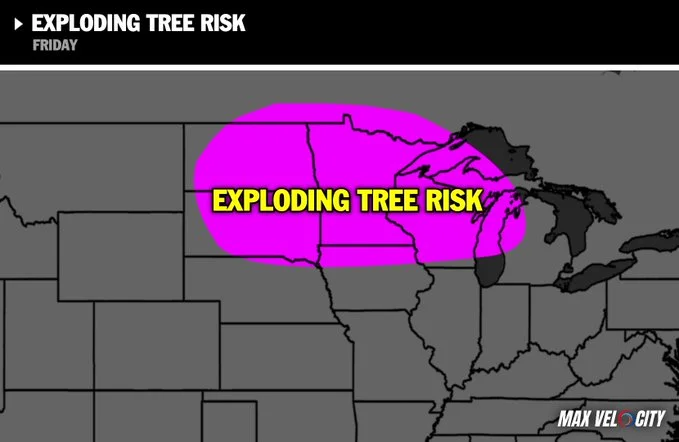
Are Trees Really Exploding from Cold? Expert Reality Check
Social media clips of trees exploding from cold show impressive fissures but no Hollywood-style detonations. McNee notes: “I’ve never witnessed total explosion damage. Extreme pressure release might shatter sections, but the trunk typically survives with a permanent scar.”
Meteorologist Benjamin Sheppard adds that trees exploding from cold needs sustained -20°F or lower, common now from the Rockies to New England. Call an arborist for leaning cracks – fallen trees pose real hazards.
Current Weather Triggering Trees Exploding from Cold
The National Weather Service warns of arctic outbreaks through January 26:

- Wind chills: -60°F (Illinois, Dakotas); -10°F (Montana to Northeast).
- Snow storm: Heavy accumulations Rockies to Mid-Atlantic.
- High-risk zones: Midwest forests, urban maples under streetlights (sunken interiors crack faster).
Past events confirm: Chicago’s 2024 polar vortex produced dozens of frost cracks mistaken for trees exploding from cold.
5 Fascinating Facts About Trees Exploding from Cold
- Sound level: Reaches 100+ decibels – louder than gunfire.
- Frequency: Common every 2-3 winters in vulnerable species.
- Sunscald link: South-facing trunks crack from daytime thaw/night freeze cycles.
- Tree adaptation: Older maples seal cracks; young ones struggle.
- Safety tip: Avoid sheltering under split trees during storms.
Beyond Trees Exploding from Cold: Winter Weather Wonders
Trees exploding from cold joins other bizarre phenomena:
- Thundersnow: Lightning amid blizzards – rare but Midwest-expected.
- Pancake ice: Wind-whipped lake disks resembling breakfast.
- Snow rollers: Nature’s tumbling cylinders down hillsides.
- Frost quakes: Ground cracks from buried water expansion (cryoseisms).
Stay Safe During Trees Exploding from Cold Alerts
Inspect properties for leaning branches. Park cars away from maples. The spectacle thrills, but trees exploding from cold reminds us nature’s power demands respect. Share your frost crack videos – has your tree “exploded” this week?