
The Players Era Tournament has quickly become one of the most anticipated early-season events on the college basketball calendar—and for good reason. Unlike traditional tournaments, the Players Era Tournament offers a novel format, high financial stakes, and a competitive environment that brings together some of the nation’s best teams in Las Vegas. In its second annual edition, the event stands out not just for the $1 million prize awarded to teams, but also for its inventive scheduling and ranking procedures.
How Does the Players Era Tournament Work?
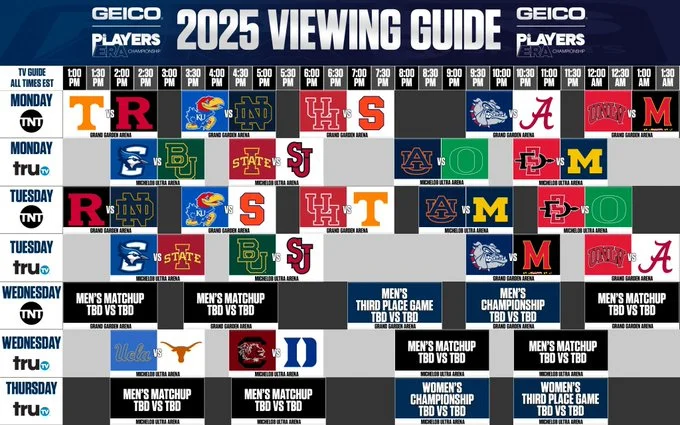
A major departure from bracket-style tournaments, the Players Era Tournament divides its 18 participating teams into two distinct pods. Ten teams compete at the MGM Grand Garden Arena, while eight more battle it out at the Michelob Ultra Arena. Unlike single-elimination formats, teams do not face a straightforward win-and-advance or lose-and-go-home scenario. Instead, every squad is guaranteed multiple games—and has a shot at the top prize based on overall performance throughout the event.
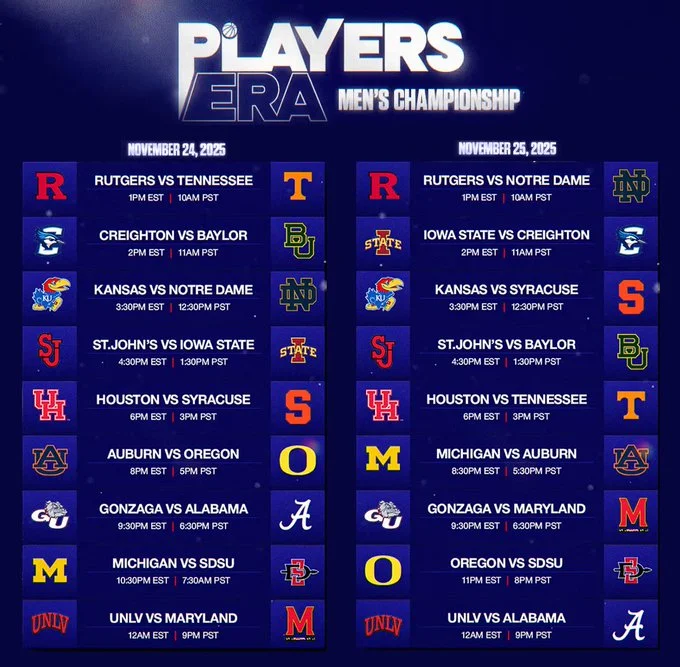
Syracuse finds itself in the MGM Grand pod, joining a formidable lineup that includes Rutgers, Tennessee, Kansas, Notre Dame, Houston, Gonzaga, Alabama, UNLV, and Maryland. The Michelob Ultra Arena pod features heavy-hitters like Michigan, Creighton, Oregon, Baylor, St. John’s, Iowa State, Auburn, and San Diego State.

Path to the Championship
Over the first two days—Monday and Tuesday—each team plays scheduled games against different opponents within their pod. What makes the Players Era Tournament especially intriguing is how the final matchups are determined. At the conclusion of Tuesday’s action, all 18 teams are comprehensively ranked based on the following set of criteria:
- Win-loss record during the event
- Head-to-head results
- Plus/Minus Tiebreaker (capped at 20 points to discourage excessive score running)
- Total points scored
- Total points allowed
- Current Associated Press (AP) poll ranking
This unique ranking system ensures that success in the tournament is measured by an array of factors, not solely by simple wins and losses. It keeps the competition fierce and invites strategic gameplay, as teams can’t rely only on the scoreboard to determine their advancement.
Finals and Next-Level Matchups
After rankings are set, the two top teams—one from each pod—will meet in the overall Players Era championship game on Wednesday. The second-ranked teams will play for third place, with both games holding extra financial incentives. Importantly, these final contests will not be reseeded to avoid teams meeting twice, so some conference rematches may occur if dictated by performance.

Teams ranked 5th through 14th after two rounds will all compete in classification games on Wednesday, carefully scheduled to avoid pitting teams from the same conference against each other. If possible, matchups between teams set to play each other in the upcoming regular season are also avoided.
Thursday’s Stayover Matches
The four lowest-ranked teams after the initial rounds face an extra challenge—playing a final game on Thursday morning at Michelob Ultra Arena. If UNLV fails to make the championship or third-place games, they’re automatically slotted into one of these Thursday contests to guarantee a local draw. Tournament organizers are authorized to tweak pairings to prevent conference and scheduled-season rematches, swapping teams between Wednesday and Thursday if needed.
Why Fans Love the Players Era Tournament
With a $1 million payout, potential for extra earnings, and a format that spotlights skill, consistency, and sportsmanship, the Players Era Tournament has carved out a niche among college basketball enthusiasts. Its flexible matchups, emphasis on point differential, and star-studded field result in competitive games and frequent surprises, all with the glitz of Las Vegas as a backdrop.

This innovative event is set to influence both early-season rankings and generate excitement for months to come, making the Players Era Tournament a must-watch for fans across the country.