
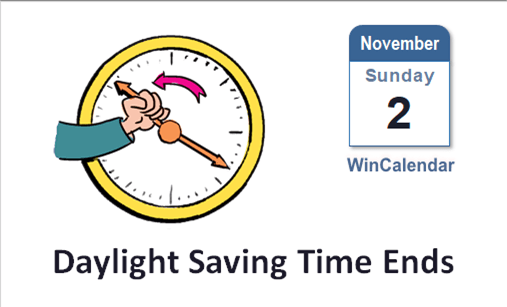
As autumn deepens and Halloween fades away, the seasonal ritual of resetting clocks is almost here. This year, daylight savings time ends on Sunday, November 2, 2025, at 2 a.m. local time, when clocks “fall back” one hour to standard time, giving millions of Americans an extra hour of sleep and signaling shorter evenings ahead.
When Does Daylight Savings Time End in 2025?
On November 2, at precisely 2 a.m., clocks across most of the United States will move back one hour to 1 a.m. This marks the official return to standard time, which will last through the winter months until daylight savings resumes in spring 2026 on March 8. Residents of Hawaii, Arizona (except for the Navajo Nation), and some U.S. territories do not participate in this change.
In places like Providence, Rhode Island, sunrise will occur around 6:20 a.m., and sunset by 4:38 p.m., making for early dusk and brighter mornings through the winter.

Why Do We Change the Clocks Twice a Year?
Daylight savings time was first introduced in the U.S. in 1918 as a wartime measure to save fuel by making better use of natural daylight. Though it was briefly discontinued, the concept was revived and standardized in 1966 by the Uniform Time Act. The most recent law expanding the daylight savings period was passed in 2005, extending it to start on the second Sunday in March and end on the first Sunday in November.

The goal is to provide longer daylight in the evenings during warmer months while allowing more sunlight in the mornings in winter to accommodate work and school schedules.
Will Daylight Savings Time Ever Be Abolished?
The biannual clock change remains controversial. Some lawmakers have pushed for year-round daylight savings time to avoid the disruption of changing clocks twice a year, while others argue for permanent standard time. Even former President Donald Trump expressed support for eliminating daylight savings time altogether, citing inconvenience and economic cost.

States and Territories Without Daylight Savings
- Hawaii
- Arizona (except Navajo Nation)
- American Samoa
- Guam
- Northern Mariana Islands
- Puerto Rico
- U.S. Virgin Islands
These locations stay on standard time year-round and do not adjust their clocks for daylight savings.
Remember to set your clocks back an hour before bedtime on November 1, 2025, and enjoy the extra hour of sleep as daylight savings time ends!