
Senate Minority Leader Chuck Schumer (D-N.Y.) faces intense criticism from the progressive wing of his party following a deal to reopen the federal government after a prolonged shutdown. While Schumer distanced himself from the agreement forged by a group of eight moderate Democrats and Republicans, progressives openly blame his leadership for the compromise, arguing it reflects ineffective advocacy against GOP demands.
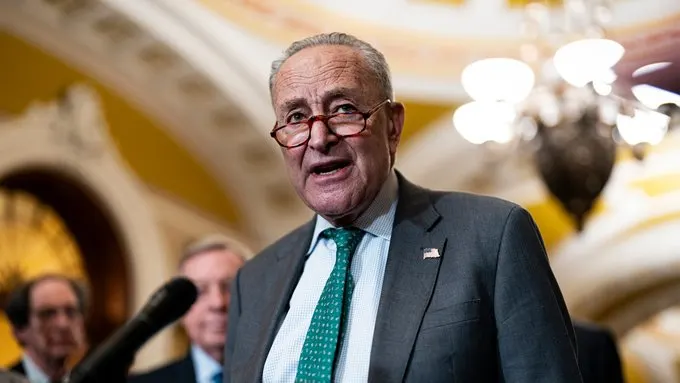
This marks the second time within eight months that Schumer’s leadership has been questioned by progressives, following his earlier support for a clean funding bill in March that also stirred controversy. Despite the backlash, many Senate Democrats defend Schumer, recognizing the complexity of steering a divergent caucus through difficult negotiations.
Sen. Richard Blumenthal (D-Conn.) acknowledged Schumer’s challenging position, noting the impossible choice Republicans forced between affordable health care and reopening the government. Schumer had proactively engaged with his caucus for months in advance, aiming to prepare for a contentious funding battle. This approach extended the government shutdown to nearly six weeks, supported by Democratic base enthusiasm after recent election successes.

Progressive Senate hopefuls and numerous House Democrats, including Rep. Ro Khanna (D-Calif.), have called for a change in Senate leadership, criticizing Schumer’s inability to halt rising healthcare premiums and more broadly question his effectiveness. Yet, on Capitol Hill, Schumer received crucial backing from House Minority Leader Hakeem Jeffries (D-N.Y.) and others who praised his efforts and openness during extended caucus discussions.
Sen. Peter Welch (D-Vt.) highlighted Schumer’s success in maintaining caucus unity amid wide-ranging viewpoints, contrasting this shutdown fight with prior disputes. Welch also noted that heightened expectations following Democratic election wins complicated no-compromise stances, emphasizing the difficulties facing any leader in such political conditions.

Though Schumer voted against the final deal, progressive critics accuse him of lacking control or permitting a minority faction of Democrats—many retiring or safe from reelection for years—to undermine party strategy. Schumer counters this by asserting that the minority achieved gains by spotlighting rising health care costs and placing responsibility on Republicans to resolve the crisis.
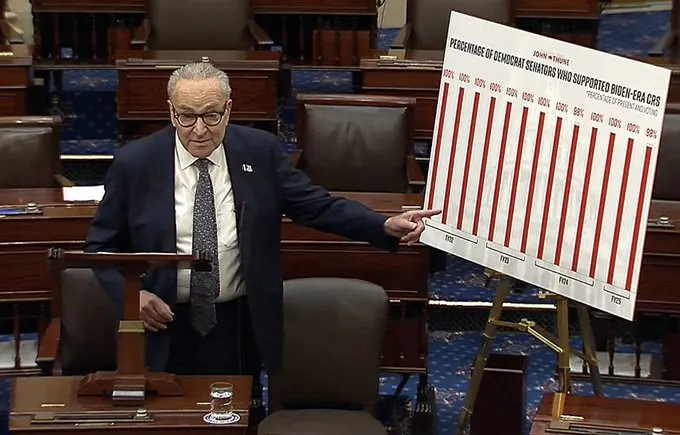
Senate Minority Whip Dick Durbin (D-Ill.), one of the eight “yes” votes on the funding bill, stated Schumer neither endorsed nor opposed the militants who backed the compromise, calling Schumer’s position “a hard assignment” he handled well.
Democrats generally acknowledge Schumer remains in a stronger position within the caucus than after the earlier March vote on continuing resolution funding. While some public critiques persist, figures like Sen. Tim Kaine (D-Va.) affirm the caucus mood favors Schumer’s continued leadership, though Sen. Elizabeth Warren (D-Mass.) refrains from commenting on leadership disputes publicly.

In summary, Chuck Schumer navigates a fraught moment in his political career as he balances progressive discontent, caucus cohesion, and pragmatic governance. With a historic government shutdown ending through a bipartisan deal, Schumer’s leadership remains under watch amid calls for change and staunch defense from party allies. The resulting tension exemplifies the broader challenges Democratic leaders face in uniting diverse factions while advancing legislative goals.