
The Smashing Machine is not just another Dwayne Johnson action vehicle – it is a bruising, slow‑burn character study now streaming on HBO Max and available on VOD platforms like Amazon Prime Video. Positioned as a prestige turn for Johnson, the film initially looked like classic Oscar bait, yet it ultimately missed out on a 2026 Academy Award nomination while still redefining how audiences see “The Rock” as an actor. Instead of the usual larger‑than‑life hero, The Smashing Machine presents him as a deeply conflicted fighter quietly imploding behind the scenes.
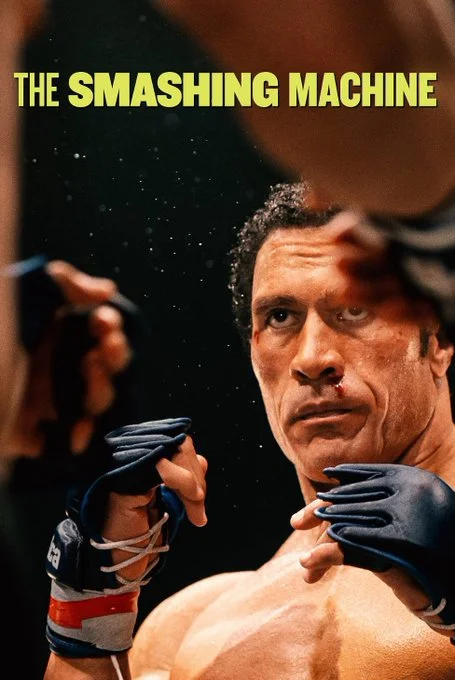
In The Smashing Machine, Johnson portrays real‑life MMA trailblazer Mark Kerr, a dominant heavyweight in the late 1990s whose life is split between violent success in the ring and chaos everywhere else. On fight night in Brazil in 1997, Kerr knees and punches an opponent until the referee jumps in, yet the first thing he wants to know is whether the man he just battered is okay. That contradiction defines the movie: Kerr is a “gentle giant” with a calm voice, easy smile and philosophical take on MMA, even as his career is built on breaking faces and bodies. At a doctor’s office, he explains to a curious woman that the sport exists to test which centuries‑old martial art is truly the most effective, even as he quietly rummages through vials of drugs when no one is looking.
There’s no other high like it.
It all became a drug.
Pressure.
Benny Safdie’s THE SMASHING MACHINE is now available to watch at home 🥊#thesmashingmachine pic.twitter.com/4CFFePNuVZ— Dwayne Johnson (@TheRock) November 4, 2025
Director Benny Safdie uses The Smashing Machine to expand the story beyond the 2002 documentary that first chronicled Kerr’s life, turning it into an intense drama about addiction, identity and self‑destruction. Safdie, working without his brother Josh, leans on the same nervous energy and realism that defined films like “Good Time” and “Uncut Gems,” but here channels it into a sports world where every punch has psychological consequences. Kerr is an NCAA wrestling champion turned MMA star who bounces from early‑era UFC struggles in America to the big‑money Pride promotion in Japan, carrying painkillers and needles with him like invisible luggage. Opioids smooth out the physical punishment, but they also blur his ability to connect with the people who genuinely care for him, especially his girlfriend Dawn.
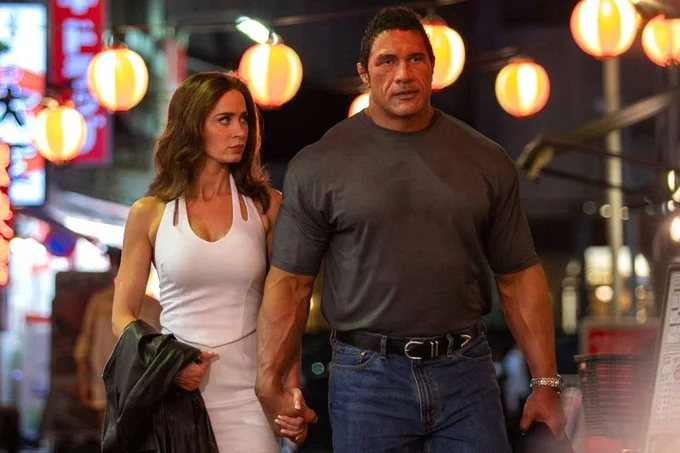
Dawn, played by Emily Blunt, brings both glamour and volatility into The Smashing Machine. She’s presented as a high‑heels, manicured “girly‑girl” who helps Mark train, stretches with him in intimate sessions and appears glued to his side, yet their relationship is fragile beneath the surface. When she feels guilty about not making his protein shake correctly, Mark soothes her with a gentle “It’s not your fault. You didn’t know,” reinforcing the film’s portrait of him as a sweet, conflict‑avoidant partner at home. But the drugs, constant travel and pressure of being “The Smashing Machine” slowly poison the bond, culminating in locker‑room confrontations and arguments that mirror the brutality of his fights.

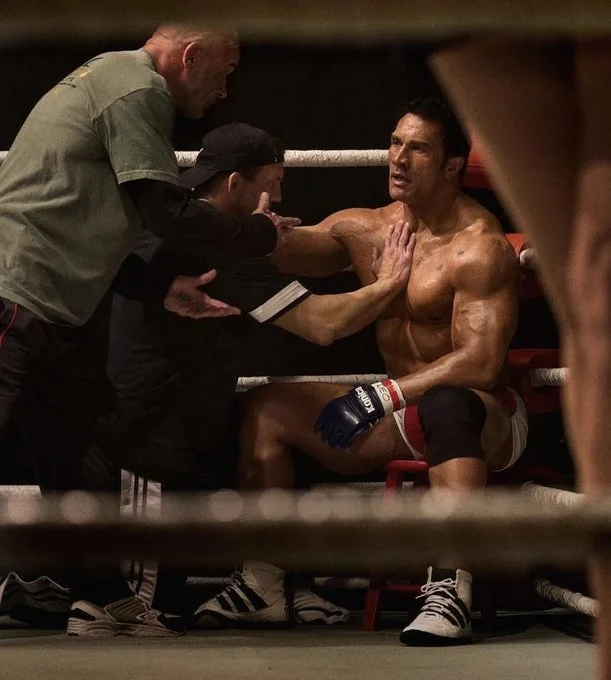
The Japan sequence underscores how The Smashing Machine uses small details to show Mark’s fractured state. Squeezed into a plane seat to Tokyo, he asks a fellow passenger to open the window shade so he can admire the sunset, savoring a rare moment of peace. When he lands, he discovers Pride has banned the very weapons—headbutts and knees to the face—that helped build his legend, forcing a strategic shift that rattles his confidence. Before a bout with a stocky Russian opponent, played by real‑life boxing champion Oleksandr Usyk, Dawn confronts him backstage and asks if he is high, igniting a personal battle before the professional one even begins. The fight itself goes wrong, with Kerr enduring illegal knees and suffering his first major loss; his reaction is not rage, but a quiet walk to the locker room followed by a sudden flood of tears.

Stylistically, The Smashing Machine pushes back against conventional sports‑movie formulas. Safdie avoids slick training montages and triumphant soundtrack swells, instead capturing the fights from low angles outside the ropes with tight, sometimes claustrophobic framing that emphasizes the ugliness and exhaustion of MMA. A loud, persistent play‑by‑play announcer acts almost like a narrator, but the real drama plays out in Mark’s silences—on airplanes, in medical offices, at home staring at doors he can easily splinter. The climactic moment does not arrive with a belt being raised; it happens inside Kerr’s head while he is lying on the mat mid‑fight, a psychological showdown that forces viewers to confront his inner turmoil rather than cheer for a clean victory.

For viewers wondering what The Smashing Machine feels like, the film sits closer to character‑driven dramas such as “The Wrestler,” “The Iron Claw” and “Foxcatcher” than to more conventional MMA fare like “Warrior.” Johnson’s performance is widely seen as one of the most complex of his career, packed with small choices in posture, facial expression and tone that convey Kerr’s insecurity and pain more than any speech could. There is no single “Oscar clip” moment, and that appears deliberate; the movie is built from understated scenes like Mark declining a carnival ride because of his “sensitive tummy” or looking visibly uncomfortable watching a smash‑up derby, even though his job is to dish out real‑life punishment.
At the same time, The Smashing Machine is not an easy crowd‑pleaser. Its herky‑jerky realism, subdued highs and lows, and sometimes underwritten supporting characters—particularly Dawn and fellow fighter Mark Coleman—can leave viewers feeling more drained than exhilarated. Safdie seems less interested in providing catharsis than in forcing audiences to “wrestle with” Kerr’s contradictions: a man addicted not only to painkillers, but to the adrenaline rush of applause and victory, stuck in a profession that clashes with his gentle instincts. By the time the credits roll, we have seen many of his vulnerabilities and few of his triumphs, which makes The Smashing Machine a tough love story about a fighter who cannot escape himself.
For anyone curious about Dwayne Johnson’s serious acting range, or for fans of grounded, psychologically rich sports dramas, The Smashing Machine is absolutely a “stream it” recommendation on HBO Max and digital platforms.