
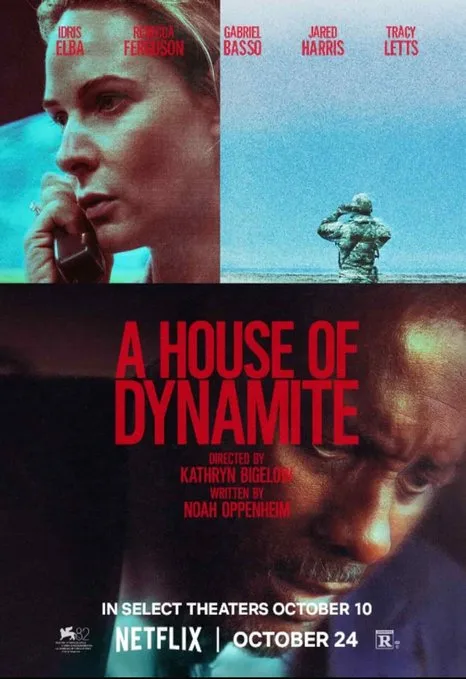
Netflix’s “A House of Dynamite,” the latest doomsday thriller from acclaimed director Kathryn Bigelow, throws viewers into one of the most gripping what-if scenarios in recent movie history. When an unidentified nuclear missile heads for Chicago, the American government has less than 20 minutes to respond—and every second counts. The film, lauded for its tension and realism since its Venice Film Festival premiere, is now sparking debate over its bold, ambiguous ending.

Frantic Decisions, Ruthless Countdown
Unlike traditional disaster movies, “A House of Dynamite” unfolds almost entirely within the intense 18-minute window after detection of an incoming strike. The story perspective shifts between key military and government officials, including Captain Olivia Walker (Rebecca Ferguson) in the White House Situation Room, Major Daniel Gonzalez (Anthony Ramos) at Fort Greely, and ultimately, the President (Idris Elba), who must choose whether to retaliate or stay his hand. Real-life stakes mirror the fictional drama, as high-ranking officials scramble to intercept the warhead, analyze international threats, and manage personal crises amid growing panic.
The Conundrum: No Clear Villain, Impossible Choices
Screenwriter Noah Oppenheim deliberately refrains from identifying the perpetrator, underscoring the unpredictable and interconnected nature of global nuclear policy. Instead of focusing on a villain, “A House of Dynamite” examines the fragile system—where thousands of deadly weapons and human error intertwine, leaving world leaders with unimaginable power and limited time to decide humanity’s fate.

A Blackout Ending: Bold or Frustrating?
As the clock ticks down, the President is whisked away from a public event, handed the infamous “Black Book,” and confronted with escalating pressure to authorize a nuclear counterattack. In a moment loaded with existential weight, just as POTUS is about to make his decision, the film cuts abruptly to black—the consequences, and humanity’s fate, left unknown.
This controversial ending splits audiences: Some call it a powerful artistic statement, forcing viewers to confront the dreadful ambiguity real decision-makers face. Others feel the lack of closure is a dramatic letdown, missing the catharsis audiences expect from high-stakes thrillers.

Themes Beyond the Final Frame
Instead of answering what happens to Chicago or the world, the film spotlights systemic fragility and the existential burdens placed on those in power. Bigelow suggests in interviews that this is the entire point—the absence of a neat resolution is itself the prompt for public reflection, conversation, and (hopefully) advocacy for a safer, saner world.
Why It’s Dividing Viewers—and What It Means
“A House of Dynamite” rebelled against the Hollywood playbook for nuclear disaster. The lack of a hero, absence of a clear-cut villain, and refusal to reveal the outcome leave viewers with only questions—about national security, global politics, and personal morality. For some, it’s a necessary wake-up call. For others, a frustrating cop-out that cheats the audience out of dramatic payoff.
But in Bigelow’s own words, by keeping the bomb from detonating on screen, the film shifts the focus from spectacle to discussion—it’s not just entertainment, but a call to consider how close we are to catastrophe and how important our choices remain.

If you’re searching for a thriller that’s equal parts pulse-pounding and thought-provoking, “A House of Dynamite” on Netflix is a must-watch. The ending may leave you debating for days—is it brilliant, or a missed opportunity? One thing is clear: the unanswered question at the film’s close is meant for all of us.