
In a move drawing national attention, former President Donald Trump has officially signed a new Columbus Day proclamation, declaring Monday as a celebration of Christopher Columbus and his “extraordinary legacy of faith, courage, perseverance, and virtue.”
The announcement comes as part of Trump’s ongoing effort to revive the traditional holiday and “bring Columbus Day back from the ashes,” a promise he made earlier this year on social media.
Trump’s Push to Restore Columbus Day
The proclamation, released from the White House, outlines Trump’s intent to preserve Columbus’ historical status despite growing debates surrounding the holiday. According to the document, “left-wing activists” have attempted to “erase Columbus’ name and dishonor his memory,” a sentiment Trump described as part of a larger cultural battle over American identity.
Prominent Republicans, including Rep. Elise Stefanik and Rep. Mike Lawler of New York, praised the proclamation. Stefanik posted on X (formerly Twitter), “New Yorkers love Columbus Day,” while Lawler added, “Viva Italia! As a proud Italian-American, I fully support celebrating the rich history and contributions of Italian-Americans.”

Indigenous Peoples Day Debate Continues
While Columbus Day remains one of 12 federally recognized holidays, it has faced increasing replacement in several states by Indigenous Peoples Day — a holiday honoring Native American heritage and contributions.
According to the Pew Research Center, 30 states and three U.S. territories still recognize Columbus Day in some form, while 17 states and Washington, D.C., observe Indigenous Peoples Day instead. Several others acknowledge both commemorations on the same day.

Critics of Trump’s move argue that Columbus’ voyages led to the genocide, land theft, and forced religious conversions of millions of Indigenous people across the Americas. Kerri Malloy, a professor of Native American and Indigenous Studies at San José State University, stated that “the proclamation repeats the idealized version of Columbus’ story while overlooking the darker consequences of his expeditions.”
A Look Back at the History of Columbus Day
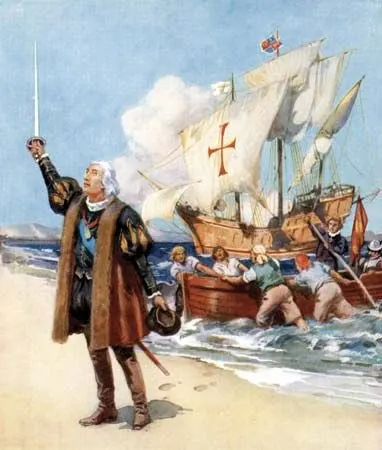
Christopher Columbus, born in Italy in 1451, embarked on his first voyage in 1492, mistakenly believing he had reached Asia. His expeditions opened European awareness to the Americas, though Columbus never reached the land that is today the United States.
Columbus Day was first proclaimed in 1892 by President Benjamin Harrison following the lynching of 11 Italian immigrants in New Orleans. President Franklin D. Roosevelt later made it a federal holiday in 1934, originally intended to celebrate Italian-American heritage and contributions.

Political Divides and Public Response
Subsequent to the signing ceremony, Trump proclaimed, “We have returned, Italians”. We love the Italians,” emphasizing ties with Italian-American communities — a key voting demographic for his political base.
However, Indigenous rights advocates see the proclamation as an attempt to dismiss years of social progress in recognizing the suffering inflicted during colonization. Matthew Fletcher, who serves as the director of the Indigenous Law and Policy Center at Michigan State University, stated, “This is the president provoking individuals of color and marginalized communities.”
Despite the political tensions, many communities across the U.S. plan to continue celebrating both holidays in their own ways. Fletcher remarked, “No matter the name, Indigenous individuals will continue to celebrate and be honored. For many, it’s a day of remembrance and resilience.”
Columbus Day in Today’s America
Today, Columbus Day remains deeply divisive — celebrated as a symbol of heritage by some, while criticized as a reminder of historical oppression by others. As the nation debates how to balance both histories, Trump’s proclamation has once again placed the explorer’s legacy — and America’s evolving identity — at the center of political and cultural conversation.